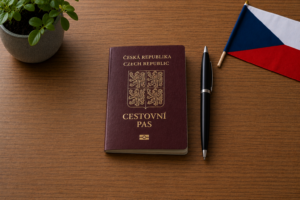
Czechia has quietly become one of Europe’s most attractive study destinations for international students. And its popularity continues to grow. This is despite the fact that Czech visas are usually required by non-EU nationals. While Prague, Brno and Olomouc remain the most popular university cities, many smaller cities and towns (such as Zlín and Ostrava) are now attracting twice as many, or even more, international students than ten years ago. Many choose to study traditional programmes like medicine, law, engineering or business. However, the range of courses and degree programmes available is far broader.
Benefits of studying in Czechia
It is easy to see why Czechia has become such a popular study destination:
- internationally recognised universities,
- lower living and tuition costs than in many Western European countries,
- beautiful historic cities,
- excellent public transport,
- and some of the best student nightlife in Europe.
Perhaps most importantly, Czechia offers a unique combination of high academic standards and a genuinely enjoyable quality of life.
Universities in Czechia popular with international students
Currently, Czechia is home to more than 50 universities and other higher education institutions. That is quite a lot, considering the size of the country. Among these, the best-known universities include:
- Charles University in Prague,
- Masaryk University in Brno,
- Czech Technical University in Prague,
- Palacký University Olomouc,
- and the University of Chemistry and Technology Prague.
Importantly, many universities now offer programmes taught fully in English, particularly in:
- medicine and pharmacy,
- dentistry,
- economics,
- law and cybercrime
- computer science and technology
- and international relations.
Student life in Czechia
Student life in Czechia is usually much more affordable than in cities such as London or Amsterdam.
For example, students often find:
- rent cheaper than in many Western European capitals,
- public transport surprisingly reliable and cheap,
- and café and pub culture dangerously addictive.
Prague is famous for its architecture and nightlife, while Brno has a more relaxed student atmosphere with a huge international community.
Meanwhile, Olomouc is often described as one of Europe’s hidden student gems.
And yes — somebody will eventually tell you Czech beer is cheaper than water.
Well, that is of course not true. But you can still get a pint for under £2.50 in many places.
Czech culture: a few things students quickly learn
Living in Czechia can feel wonderfully different from studying in the UK.
A few things international students often notice:
- trams and buses somehow arrive exactly on time,
- people remove their shoes indoors,
- mushroom picking is treated almost like a national sport,
- and nobody is in a hurry to smile at strangers on public transport.
However, once you get to know Czech people, many students find locals friendly, direct and extremely loyal.
You will also quickly discover that Czechia loves festivals.
Depending on the season, you may come across:
- Christmas and Easter markets in Prague and Brno,
- wine festivals in Moravia,
- student Majáles festivals and other student events,
- or riverside summer concerts.
In other words, studying in Czechia is not only about lectures and exams.
Preparing to study: documents, Czech visas and administration
There is so much to look forward to. But there is also paperwork.
Before classes even start, you may need to deal with:
- university admissions,
- visa applications,
- accommodation confirmations,
- and health insurance
Depending on your nationality and the university involved, applicants are often asked to provide:
- academic transcripts,
- criminal record certificates such as ACRO,
- and proofs of funds and accommodation.
Importantly, please bear in mind that requirements vary depending on your personal circumstances. Therefore, it is always important to check the latest guidance from the Embassy of the Czech Republic in London (or another competent authority) carefully before submitting your documents.
Certified translations for university applications and Czech visas
Many international students need certified Czech translations when applying to universities, arranging visas or dealing with official administration in Czechia.
Commonly translated documents include:
- student finance letters and bank statements
- criminal record certificates such as ACRO,
Crucially, certified translations submitted to Czech authorities or universities should accurately reflect the original documents as well as comply with official requirements. Even small inconsistencies can create unnecessary delays during the application process.
Czech visas and residence documents
Non-EU students studying in Czechia may need:
- a long-term Czech visa,
- or a residence permit for study purposes.
As part of the application process, Czech authorities normally request official translations of supporting documents.
Do not leave everything until the last minute
Even if your circumstances make for a relatively straightforward application, it is worth remembering that paperwork rarely moves at student speed.
For example, it often takes 3–4 weeks to obtain your ACRO certificate (unless you choose the expedited route, which is, unsurprisingly, much more expensive). Then there is the apostille (which often takes weeks to obtain too). And then the translation. Depending on your circumstances, some documents may even need to be notarised – that is to say, a notary must officially confirm that they are genuine.
If your academic year in Prague starts in mid-September and it is only June, it may feel as though you have plenty of time. However, experience suggests otherwise.
Starting your Czech visa application as early as reasonably possible can save a great deal of stress. And it may also spare you the cost of last-minute services such as express apostilles. After all, there are far better things to spend your student budget on.
Finding accommodation in Czechia
Most international students choose between:
- university dormitories,
- private student accommodation,
- or shared flats.
In Prague in particular, good student accommodation can disappear surprisingly quickly. Believe it or not, if you start searching one month before the start of the academic year, that may already be too late.
And while it may not be as dramatic in smaller cities and towns like Brno or Olomouc, starting your housing search early is still a very good idea.
There will probably always be some accommodation available. But you wanted a nice place for a good price, didn’t you?
Learning Czech: do you need to?
Technically, many international students complete their entire degree in English. And because many locals speak English, especially in Prague, you will certainly not need to learn the language to survive.
That said, surviving is one thing. And having an enjoyable, memorable stay is another. That is why learning at least the basics of Czech could make a whole lot of sense.
Even simple phrases can help with:
- shops, cafés and pubs,
- public offices,
- doctors,
- and travelling outside major cities.
Fortunately, Czechs are usually very understanding when foreigners attempt the language.
Even if pronunciation occasionally goes spectacularly wrong.
Important information
This page provides general information for prospective international students considering university study in Czechia. Requirements for Czech visas, translations and university admissions can vary depending on nationality, institution and individual circumstances.
Students should always confirm the latest Czech visa requirements directly with the relevant Czech embassy or the competent Czech authorities.
Need certified Czech translations?
Having helped many students prepare documents for Czech university and visa applications, I understand how stressful deadlines can be and aim to make the translation process as straightforward as possible.
Applying for a Czech visa? Need your criminal record check, student finance letter or bank statement translated? Feel free to contact me to discuss your requirements.